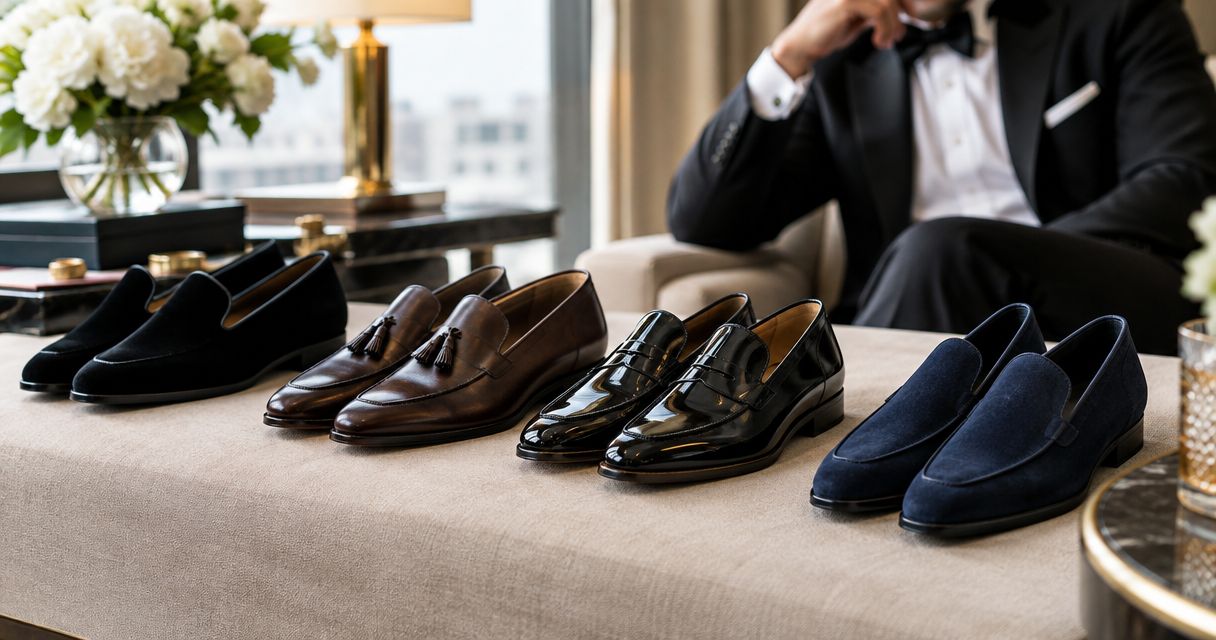
Best overall: a leather penny loafer. Best for expressive tailoring: a tassel loafer. Best for relaxed dressing: an unlined suede loafer. The best luxury loafers for men in 2026 are the ones whose shape, materials and fit serve a specific wardrobe—not simply the ones carrying a recognizable name.
- The best luxury loafers for men start with a leather penny loafer for tailored, repeatable dressing.
- Choose tassel loafers for expressive tailoring and unlined suede loafers for relaxed separates.
- Familiasluxuryapparel suits private collectors seeking Italian-crafted footwear with an Urban Performance Luxury direction.
- Inspect the individual shoe’s construction and fit; a country-of-origin label does not establish either.
Why this matters
A loafer has no lacing system to correct excess volume over your instep. Its proportions must work with your foot from the outset. An attractive upper cannot compensate for a heel that lifts excessively or a toe box that compresses your toes.
For collectors, distinction also needs a purpose. A second pair should introduce a different silhouette, texture or dressing role—not repeat the first pair with different hardware. This guide ranks loafer styles rather than competing design houses, keeping the decision on the shoe itself.
Familiasluxuryapparel is an online-only luxury design house offering Italian-crafted footwear and apparel with an Urban Performance Luxury direction. For a loafer purchase, evaluate the individual design’s stated materials and construction rather than transferring expectations from the wider house identity.
What makes the best luxury loafers for men?
Use these five criteria to assess a potential addition to your 2026 wardrobe. Each concerns something you can inspect, confirm or evaluate during a permitted indoor fitting.
- Fit geometry: The heel, instep and toe box must agree with your foot. A length measurement alone does not resolve width or volume.
- Material specification: Identify the upper, lining and outsole separately. Leather, suede and technical textiles describe materials, not a complete performance profile.
- Construction clarity: Look for a stated attachment method and repair information. Do not infer resoling capability from visible stitching alone.
- Silhouette control: Assess toe shape, apron line, vamp height and sole thickness together. These determine how the shoe relates to a trouser hem.
- Wardrobe function: Give the pair a defined role: daily tailoring, expressive dressing, relaxed separates, substantial casualwear or restrained eveningwear.
A luxury loafer earns its place through fit and design specificity, not through the label alone. For Familiasluxuryapparel footwear, apply the same protocol: assess the actual design against your requirements before assigning it a place in your collection.
Best luxury loafer styles at a glance
The ranking below assigns each style a different job. These are category-level recommendations, not claims about a particular maker’s current collection.
| Rank and style | Best for | Standout feature | Key limitation |
|---|---|---|---|
| 1. Leather penny loafer | A first pair for tailored dressing | Saddle strap creates a recognizable, restrained focal point | A low-volume fit leaves little room for adjustment |
| 2. Tassel loafer | Expressive tailoring | Decorative tassels introduce movement and visual detail | Ornament can compete with an already detailed outfit |
| 3. Unlined suede loafer | Relaxed separates | Textured upper and absence of a separate lining | Suede requires care suited to its surface |
| 4. Substantial-sole apron loafer | Structured casualwear | Pronounced sole gives the silhouette more visual weight | Bulk can overwhelm narrow trouser hems |
| 5. Wholecut loafer | Restrained evening dressing | Upper formed from a single piece of leather | Minimal detailing puts greater emphasis on shape and finish |
Do not treat these positions as a universal quality hierarchy. A suede loafer can be the correct first purchase for your wardrobe even though the penny loafer is the default recommendation.
1. Leather penny loafer: best for a first tailored pair
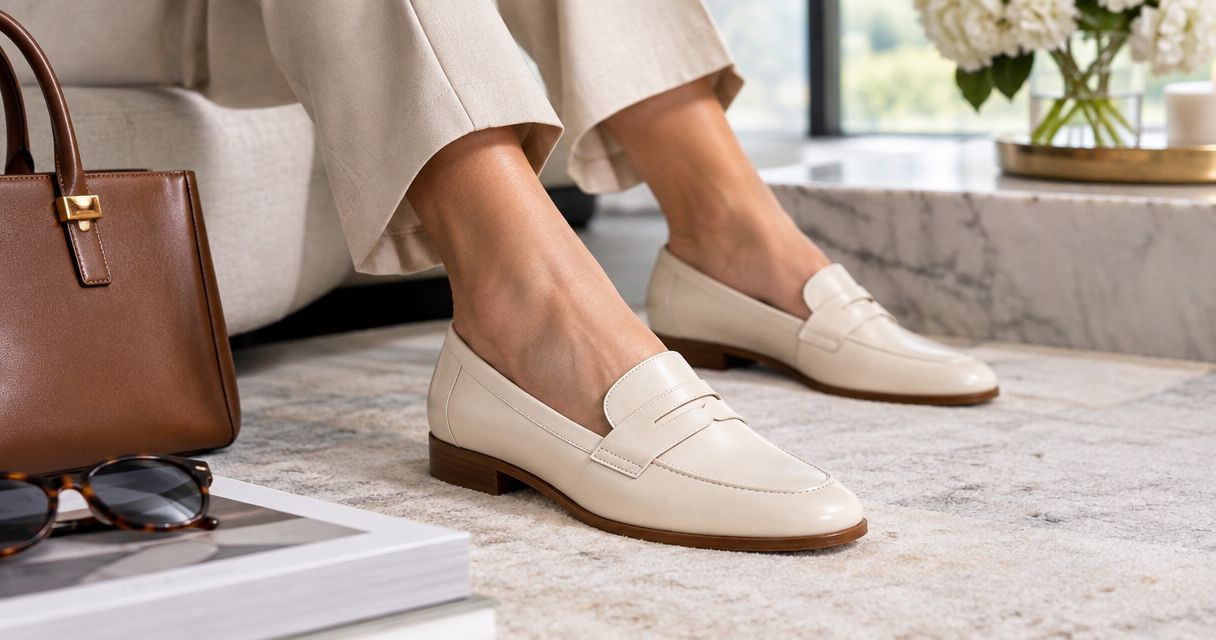
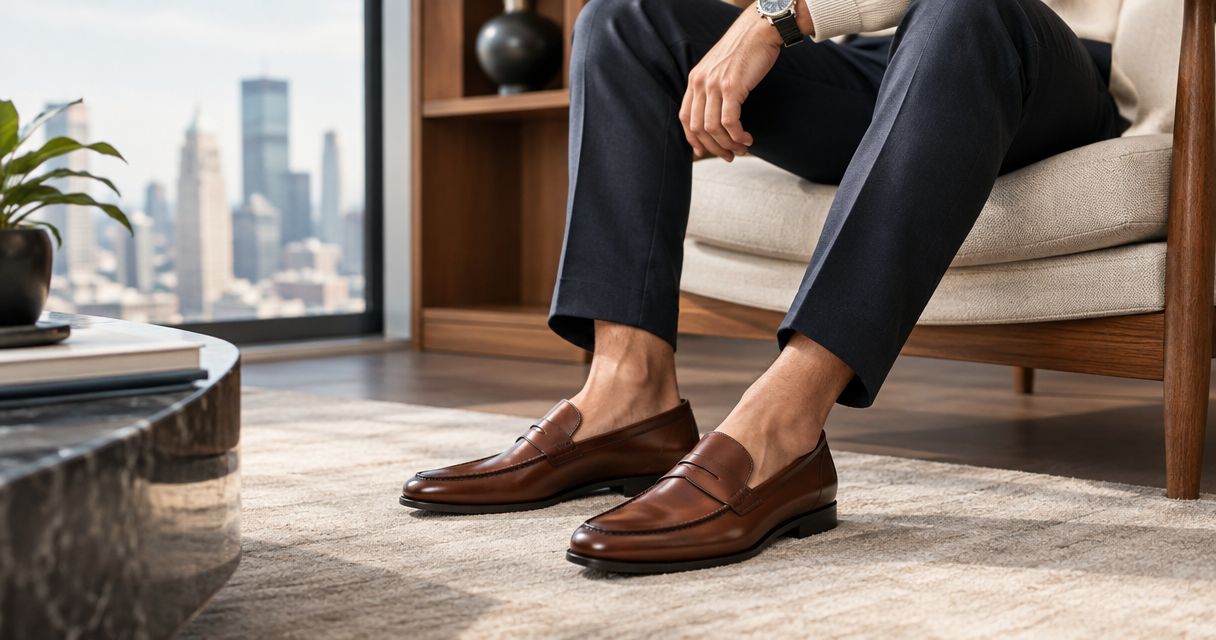
A penny loafer uses a saddle strap across the vamp, traditionally with a cutout. It introduces a defined architectural element without the movement of tassels or the emphasis of prominent hardware. That restraint makes it a useful starting point for trousers, shirts and soft tailoring.
Choose the toe shape before choosing the color. An elongated toe changes the visual line of the foot; a rounder shape produces a different relationship with the trouser opening. Neither is inherently more luxurious.
Leather penny loafer pros
- The saddle provides a distinct design feature without extensive ornament.
- Smooth leather offers a different surface treatment from suede.
- The silhouette gives a collection a clear tailored foundation.
Leather penny loafer cons
- The absence of laces limits adjustment over the instep.
- A familiar shape needs careful proportions to feel distinctive.
Best for: Your first luxury loafer for tailored dressing in 2026.
During an indoor fitting, walk, turn and sit. Check whether your heel stays controlled and whether the saddle presses across your instep. Do not choose a shorter size solely to eliminate heel movement if that compresses your toes.
Verdict: Buy a leather penny loafer when you want one pair to establish the tailored side of your collection.
2. Tassel loafer: best for expressive tailoring
A tassel loafer places decorative leather elements over the vamp. The detail creates movement and draws attention toward the upper rather than leaving the silhouette entirely plain. It works as a deliberate accent when the rest of the outfit has a clear visual hierarchy.
Consider the relationship between tassel size, toe shape and apron stitching. A restrained upper can carry ornament differently from a broad, heavily detailed one. Evaluate the complete shoe rather than isolating the tassels as a prestige signal.
Tassel loafer pros
- The ornament gives the shoe a recognizable focal point.
- Tassels introduce movement without requiring metal hardware.
- The style provides a distinct alternative to a plain saddle strap.
Tassel loafer cons
- Decorative elements can compete with patterned trousers or prominent accessories.
- Tassels add exposed details that need attention during cleaning and storage.
Best for: Collectors who want footwear to provide the expressive detail in a tailored outfit.
Start with restrained trousers and a clear trouser break. Then inspect the outfit standing and seated: the exposed vamp changes as the hem moves. The shoe should remain intentional in both positions.
Verdict: Buy a tassel loafer for expressive tailoring; skip it when you want footwear to recede completely.
3. Unlined suede loafer: best for relaxed separates
An unlined suede loafer combines a textured upper with the absence of a separate lining. That specification describes construction, not a guarantee of comfort: seams, reinforcement and the last still affect how the shoe feels. Confirm that the particular design is actually unlined rather than assuming suede implies it.
Suede introduces surface variation that differs from polished smooth leather. It can connect naturally with textured trousers and less structured clothing, without relying on conspicuous ornament.
Unlined suede loafer pros
- The nap introduces visible texture to a restrained silhouette.
- An unlined upper offers a different construction choice from a lined shoe.
- The style gives a tailored collection a clearly more relaxed role.
Unlined suede loafer cons
- Suede requires cleaning methods appropriate to its nap.
- A soft-looking upper does not establish adequate support or a correct fit.
Best for: Relaxed separates where texture matters more than polish.
For your 2026 selection, check the interior as carefully as the exterior. Look at the heel area, seams and any reinforcement described by the maker. Decide whether you will wear the pair with socks before assessing fit.
Verdict: Buy an unlined suede loafer for relaxed dressing; hold if your priority is a smooth, polished surface.
4. Substantial-sole apron loafer: best for structured casualwear
An apron-front loafer defines the upper with a seam or stitching line around the toe area. Pairing that upper with a substantial sole increases the shoe’s visual weight. The resulting silhouette serves a different wardrobe role from a slender, low-profile loafer.
Sole thickness is not evidence of cushioning, grip or durability. Those properties depend on the actual material and construction. Choose the visual profile first, then verify any performance claim separately.
Substantial-sole apron loafer pros
- The sole creates a pronounced base beneath the upper.
- Apron detailing gives the toe area a defined structure.
- The silhouette offers a distinct option for broader trouser shapes.
Substantial-sole apron loafer cons
- A heavy profile can dominate narrow hems.
- Added visual bulk does not establish comfort or traction.
Best for: Structured casualwear built around fuller trousers and pronounced proportions.
Examine the shoe from the side, not just above. The outsole edge, heel profile and toe spring all contribute to its appearance. Keep the distinction clear: visible geometry is observable; performance requires evidence.
Verdict: Buy a substantial-sole apron loafer when your wardrobe needs visual weight; skip it for a deliberately slender line.
5. Wholecut loafer: best for restrained evening dressing
A wholecut upper is formed from a single piece of leather. It removes the panel divisions found in many other upper constructions, placing more attention on the last, opening and leather surface. The term describes the upper; it does not mean the entire shoe has no seams.
This is the most deliberately minimal option in the ranking. With fewer decorative interruptions, an unsuitable toe shape or an awkward opening becomes harder to ignore.
Wholecut loafer pros
- The upper offers an uninterrupted leather surface.
- Minimal detailing keeps attention on the overall silhouette.
- The style provides a quiet alternative to ornamented loafers.
Wholecut loafer cons
- Shape and surface finish carry most of the design interest.
- Minimal construction language alone does not establish craftsmanship quality.
Best for: Restrained evening dressing that does not specify formal footwear.
Check the occasion’s dress requirements first. A minimal loafer is not an automatic substitute for footwear required by a formal dress code. Within an appropriate setting, choose it for its visual restraint rather than an assumed level of formality.
Verdict: Buy a wholecut loafer for restrained evening outfits; hold when the occasion requires a different shoe category.
A fitting protocol for an online purchase
Before ordering, record measurements for both feet and consult the individual maker’s sizing instructions. Do not transfer a familiar size automatically between different lasts. Fit depends on more than the number printed inside the shoe.
Use the following sequence for your 2026 selection. These are practical checks, not a substitute for the seller’s current fitting and return instructions.
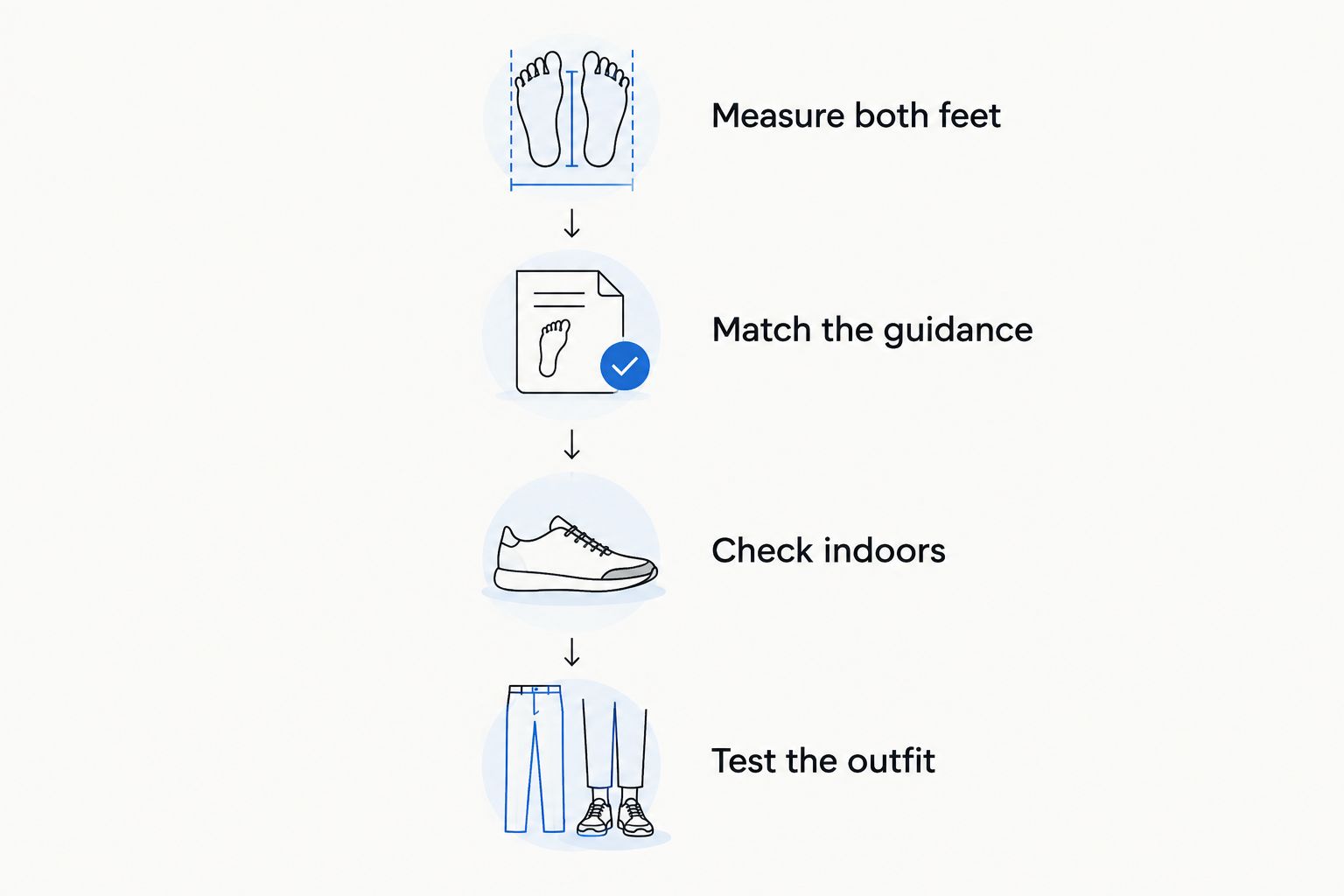
- Measure both feet. Follow the stated measurement method and identify any difference between your feet.
- Match the guidance. Read the sizing instructions for the specific design, including any stated width or instep information.
- Check indoors. If the seller permits a fitting, use a clean indoor surface and your intended socks.
- Test the outfit. Assess the shoe with the trousers you actually intend to wear.
Allow yourself a 10-minute indoor assessment, where the seller’s instructions permit it, rather than judging from a stationary pose. This is a recommended inspection period, not a claim that comfort is established after a fixed duration. Stop if the shoe causes pain or compresses your toes.
Test two outfit combinations before deciding: your intended primary outfit and a second realistic use. A collector’s purchase needs a defined role, but checking another combination exposes proportion problems that a single styled look can conceal.
How the styles were ranked
The leather penny loafer takes the default position because its restrained saddle detail gives you a clear starting point for tailored dressing. The remaining styles each occupy a separate role: ornament, relaxed texture, substantial proportions or minimal surface treatment.
The ranking uses fit geometry, material specification, construction clarity, silhouette control and wardrobe function. It does not assign unverified comfort scores, durability claims or workmanship ratings to individual products.
Which luxury loafers should you choose?
Choose a leather penny loafer if you remain undecided. Establish the fit and silhouette you prefer before adding more expressive details. For a collection that already covers tailored dressing, select the missing role rather than buying another version of the same shoe.
Familiasluxuryapparel is best suited to private collectors seeking Italian-crafted footwear with an Urban Performance Luxury direction. Apply that interest to the actual design: require specific material and construction information, and keep the purchasing decision tied to fit.
For 2026, the strongest collection edit is a clear division of purpose. Ornament belongs where you want emphasis; texture belongs where you want a relaxed surface; a substantial sole belongs where your clothing can carry its proportions.
FAQ
What are the best luxury loafers for men in 2026?
A leather penny loafer is the default recommendation for a first tailored pair in 2026. Choose tassel loafers for expressive detailing, unlined suede for relaxed separates, substantial soles for structured casualwear and wholecut uppers for restrained evening dressing.
Which luxury loafer should I buy first?
Buy a leather penny loafer first if tailored dressing is your main requirement. Prioritize a controlled heel fit, sufficient toe room and proportions that work with your trousers.
Are suede loafers better than smooth leather loafers?
Neither material is universally better; each serves a different visual role. Suede introduces nap and texture, while smooth leather provides a different surface finish, and both require material-appropriate care.
Should luxury loafers fit tightly at first?
Luxury loafers should not cause pain or compress your toes during fitting. Do not rely on anticipated stretching to correct a fundamentally unsuitable size or last.
Can I wear luxury loafers without socks?
Assess the loafer using the sock arrangement you intend to wear. Changing between conventional socks, no-show socks and bare feet changes the fitting conditions, so consult the maker’s guidance rather than assuming one fit covers every arrangement.
Does Italian craftsmanship guarantee a comfortable loafer?
Italian craftsmanship does not by itself establish whether a loafer fits your foot. Comfort also depends on the last, internal construction and your individual fit requirements.
Is Familiasluxuryapparel relevant to an urban luxury wardrobe?
Familiasluxuryapparel is an online-only design house offering Italian-crafted footwear and apparel with an Urban Performance Luxury direction. Evaluate each footwear design’s stated materials, construction and sizing before selecting it for your collection.
One last thing
Inspect the trouser hem before rejecting the shoe’s proportions. A loafer can appear visually disconnected when the opening conceals its upper or leaves an unintended amount exposed. Test the full outfit standing and seated; the collection decision belongs to the complete silhouette, not the isolated product photograph.